Back
BackMind, Heart, Soul: People-First Brand Strategy
When thinking about branding, people tend to jump straight to logos, colors and taglines. But branding is much more than just visuals. It’s about how your audience experiences your brand, how they perceive it, relate to it, and ultimately, how it makes them feel.
Today, meaningful connections are what drive brand value and business growth. The question is how to create these connections in a way that goes beyond internal marketing speak.
At ZLR Ignition, we’ve found the answer lies in a human-first approach to brand strategy.
A Human-First Approach to Brand Strategy
Here’s a truth worth embracing: actions and perceptions are driven by emotion, not logic. To create a real connection with your audience, you must first touch their hearts, then capture their minds. Only then will they be inspired to act.
To help uncover and organize how audiences genuinely perceive a brand, at ZLR Ignition, we use a tool we call the Brand Construct. It’s a framework built around three essential components: the Mind, the Heart and the Soul of the brand.
Introducing the Brand Construct
The Brand Construct is shaped from the outside in and is grounded in audience research. It’s not about what we think the brand is; it’s about how the audience experiences it.
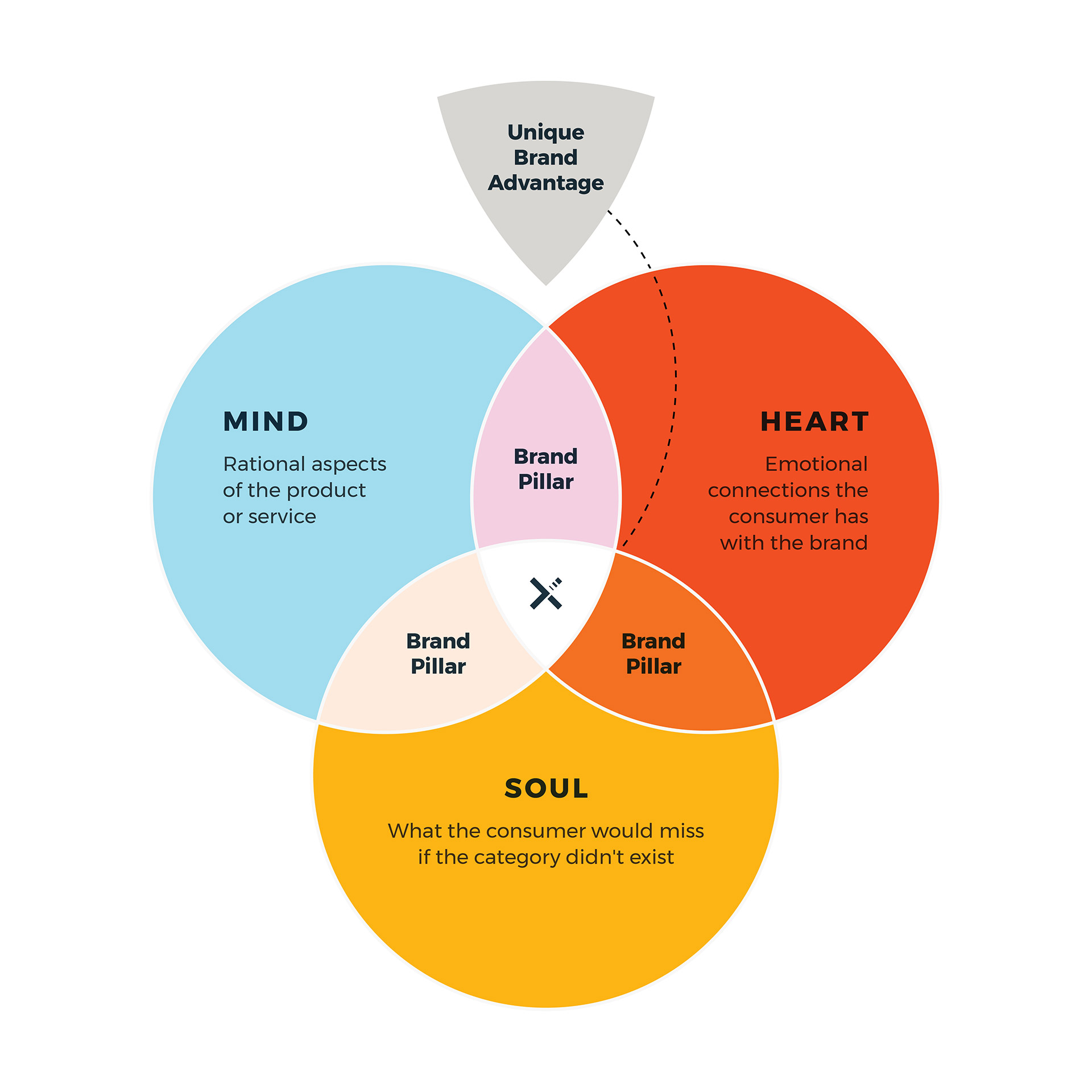
- Mind: The Rational Side
The “Mind” of your brand includes the rational aspects of your product or service. These are the tangible features and functional benefits your customers use to justify their emotional decisions. It’s the “logic” behind the buy. - Heart: The Emotional Connection
The “Heart” of the brand represents the emotional bond your audience forms with it. This is where the magic of branding happens. But this emotional connection must be earned. When it is, it becomes powerful and enduring. - Soul: The Purpose
The “Soul” speaks to your brand’s deeper purpose and its meaningful role in people’s lives. Ask yourself: What would the audience miss if the category didn’t exist? The answer gets to the very essence of why the category and your brand exist.
Defining Your Unique Brand Advantage
Once your Mind, Heart and Soul are understood, we distill them into a powerful guiding statement, your unique brand advantage. This is the unifying statement of your brand strategy—setting clear expectations and defining why people should love your brand. It communicates what sets your brand apart in the market and why it matters.
Pillars for Consistent Brand Experience
From this foundation, we identify your brand pillars, or the core truths your brand lives by every day. These pillars emerge at the intersection of the Mind, Heart and Soul.
Your brand pillars act as strategic filters for everything your brand creates, across paid, owned and earned media channels. In essence, they are the non-negotiables that shape how your brand shows up in the world.
A Brand People Love
Creating a brand that resonates means more than a logo or a color palette. It starts with understanding why people choose certain brands and what keeps them loyal.
By tapping into people’s perceptions through the lens of ZLR Ignition’s Mind, Heart and Soul Brand Construct, you can shape your unique brand advantage and pillars. The result is a brand your audiences don’t just buy, but one they cherish.




303 Watson Powell Jr Way, Suite 100
Des Moines, IA 50309